
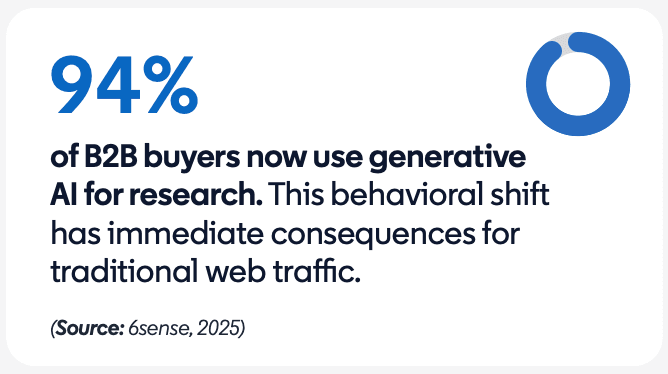
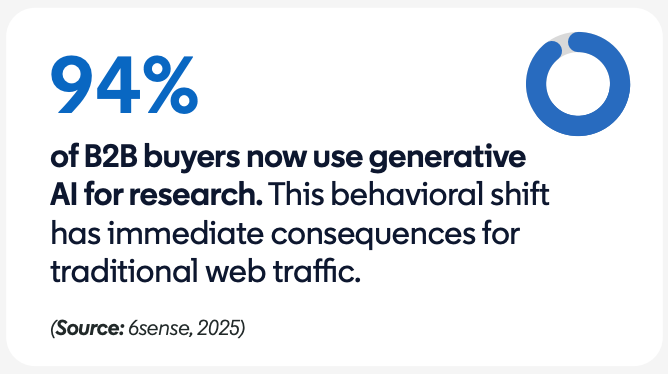
Some potential buyers conduct their research before they even approach you, while others do so after your initial meeting. Crucially, most are searching for both your brand and your specific niche. Therefore, your ranking in Generative Engine Optimization (GEO) directly impacts your sales success.
Before we get carried away, let’s remember that buyers make decisions based on both facts and emotions. I don’t want you to pivot all your LinkedIn content solely to serve GEO (which, in this context, acts as your credibility verification). You still need organic visibility and interaction—meaning emotional engagement from your target audience.
The simplified formula for success is: Credibility Verification + Emotional Engagement = $
I recommend dedicating about 1/3 of your content to GEO visibility (credibility verification) and 2/3 to driving emotional engagement (helping prospects connect with your professional approach).
I deliberately separate these two content strategies for two reasons:
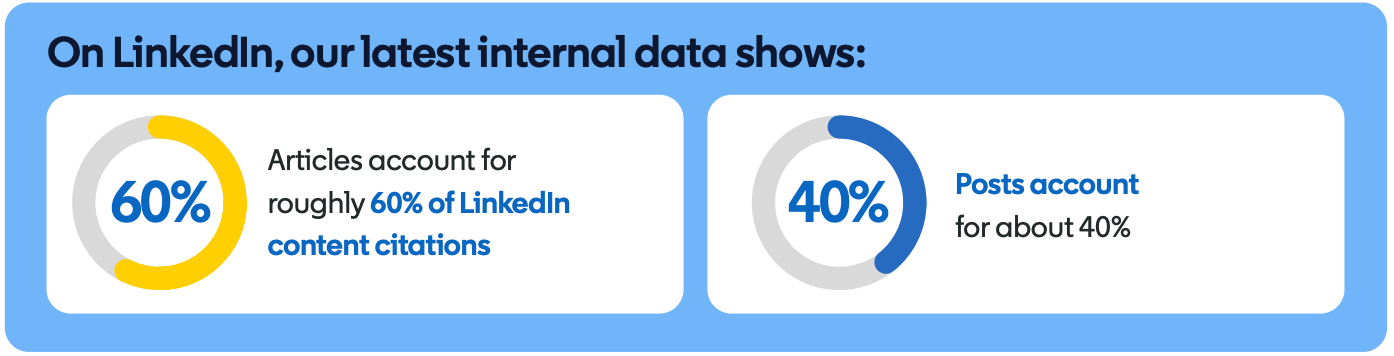
Format: GEO algorithms favor in-depth articles and newsletters, while emotional engagement thrives on standard posts. It is advisable to choose your format based on your specific goal.
Language: Slang, emotions, and personal opinions are amazing for human connection and making your content engaging. However, AI tools and GEO algorithms don’t respond well to them.
When writing for AI and GEO, they prefer:
Answering specific search prompts
Stripping complex jargon from your LinkedIn page and posts
Using clear, consistent language
Providing structured, step-by-step instructions
And that is just a biggining. We got our hands on official LinkedIn study on how to get yourself visible in AI search using LinkedIn. Here is the original source if you want to study tens of criterias you need to respect in order to increase your chances. But if you prefer a quick solution, I may have one just for you. We have put all of those criterias from this and other studies we have into:
COPY THIS ONE BIG PROMPT THAT OPTIMIZES YOUR LINKEDIN TEXT FOR GEO:
So what you need to do is just write your text as well as you can and then improve it with this prompt. Of course dubble check before publishing:
- - -
You are a GEO (Generative Engine Optimization) editor. Your job is to rewrite the
text I give you so that AI search engines (ChatGPT, Perplexity, Google AI Overviews,
etc.) can easily extract, quote, and cite it as a trustworthy source — WITHOUT
changing the original message, opinions, or voice of the piece. You are restructuring
and tightening, not reinventing the argument.
Here are the principles you follow:
1. Frame the piece around a real question the audience is actually asking
(e.g. “how to...”, “best...”, “how to choose...”, “X vs Y”).
2. Lead with the most important keywords in the title/opening line.
3. Put the direct answer or key takeaway in the first 1-2 sentences - don’t bury it.
4. Use direct questions as subheadings, then answer each in 1-2 clear sentences.
5. Convert dense paragraphs into bullet points, numbered lists, and plain
definitions wherever it aids scanning - without losing nuance.
6. Name specific entities: companies, tools, categories, criteria. Vague
references should become concrete names wherever the original supports it.
7. Include hard numbers and data points if present in my draft (or flag where
I should add a stat, price, timeframe, or example to strengthen citability).
8. Where relevant, build in a comparison/evaluation framework (pros/cons,
criteria list, ranking) or a “how to choose” decision guide — only if it
fits the original content naturally.
9. Close with a short summary, checklist, or clear takeaway - this is often
what AI models pull verbatim into their answers.
10. Keep it plain text - no reliance on images/design to carry meaning.
Avoid hashtags, emojis, and special characters in the opening line.
11. Preserve any original insight, proprietary data, or first-hand experience -
flag these as strengths, don’t cut them for brevity.
12. Rewrite the title as a clear, question-driven phrase (it becomes the URL).
13. Add a short “TL;DR” or “At a glance” section right after the title.
14. Structure the body with cascading H2/H3 subheadings mapped to audience questions.
15. Add or refine a short, natural author bio line if one exists or is needed.
=== OUTPUT FORMAT ===
Give me:
1. The rewritten text, ready to publish.
2. A short bullet list of what you changed and why (structure/wording only -
confirm you did not alter the original stance or claims).
3. Anything you couldn’t verify or strengthen (e.g. “add a stat here if you have one”).
Avoid using AI slop. Here are the banned words: delve, realm, harness, unlock, tapestry, paradigm, cutting-edge, revolutionize, landscape, intricate, pivotal, meticulously, vibrant, unparalleled, game-changer, testament, groundbreaking, foster, holistic, pioneering, trailblazing, unleash, transformative, redefine, seamless, optimize, scalable, robust, empower, streamline, elevate, visionary, reimagine, unprecedented, state-of-the-art, dynamic, AI-powered, next-generation, hyper-personalized, paradigm-shifting, underscore, synergy, high-stake, leverage, boardroom.
Do not use “—”.
Do not use emojis.
Now that you got the instuctions, ask me to give you the text to rewrite.
- - -
Do you still have doubts about all of this? I do, too. This landscape is entirely new, and no one knows all the rules of the game just yet. That is why I want to share this additional information with you:
It is super helpful when other people post about you
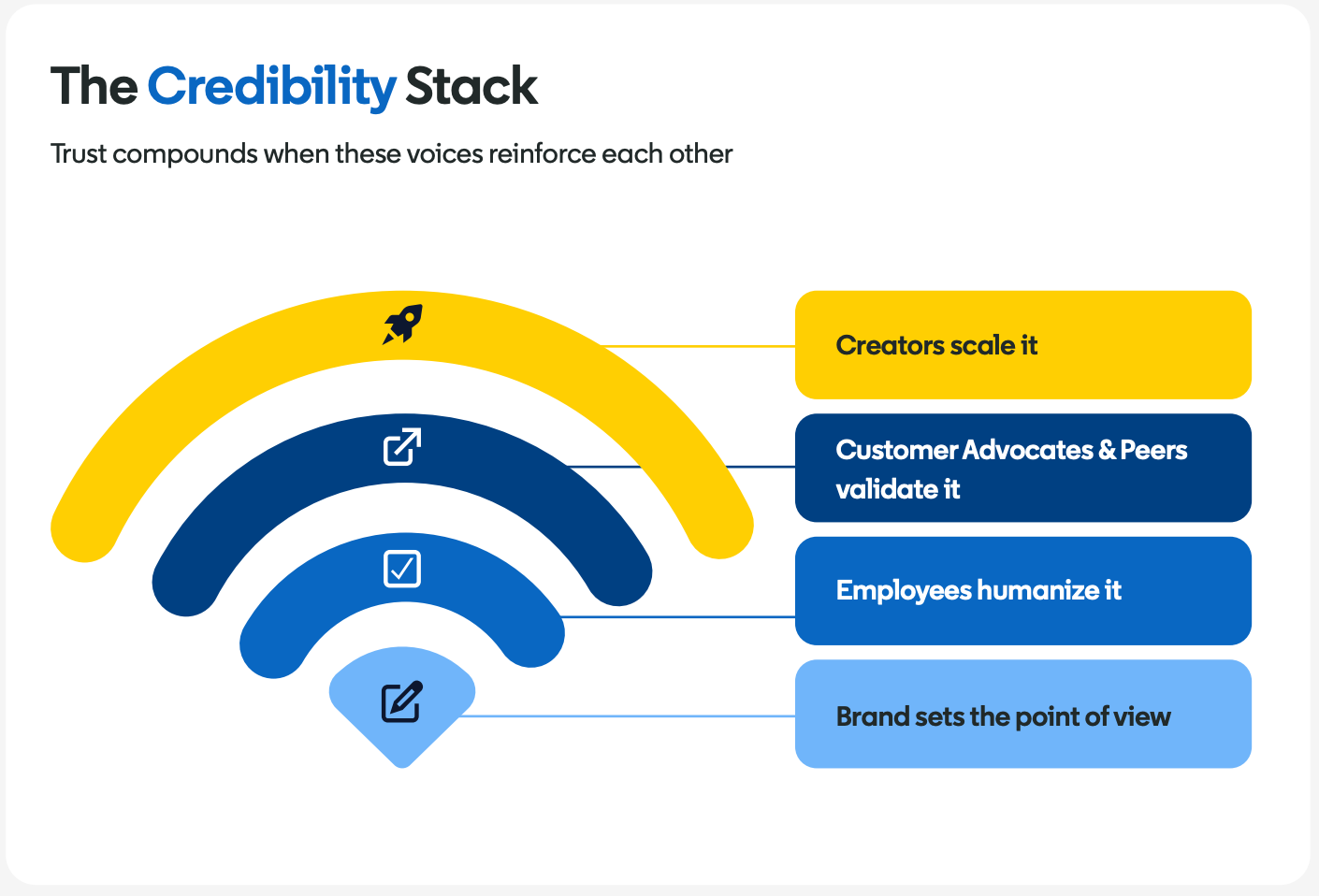
LinkedIn really is a great tool to influence your B2B GEO
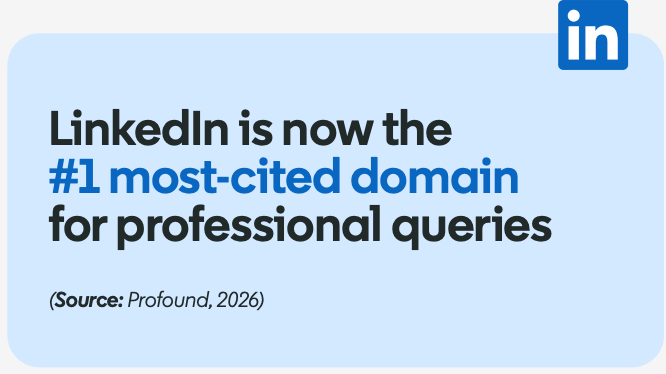
LinkedIn is a highly effective tool for influencing your B2B GEO
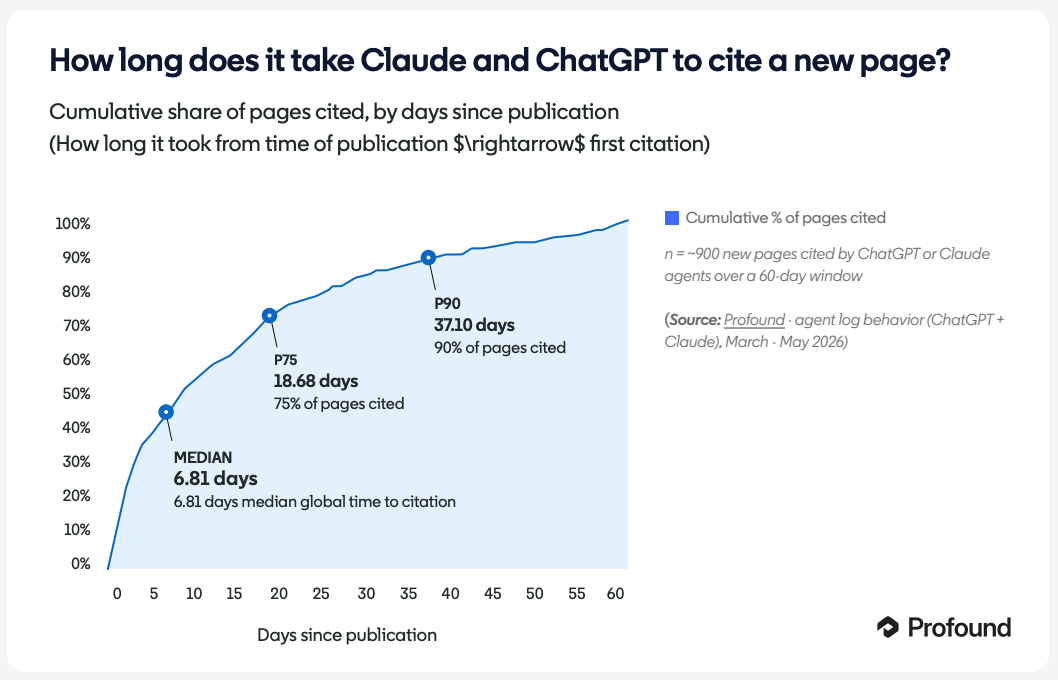
It takes about 19 days for AI to find your new article
Data used in this article are based on this recently published official LinkedIn guide.