
Here is how the game is played: your potential customer is searching for a supplier. They might type a few keywords into Google and press enter. That is the old-school approach, where you rely on SEO and PPC to gain visibility.
Now, of course, more and more buyers are frustrated with impersonal landing pages, so they prefer to search via LinkedIn and send you a private message. At least there, they can see your face and talk to you directly.
But lately, a massive shift has been happening. Buyers are explaining their needs to AI and letting it search for the right provider.
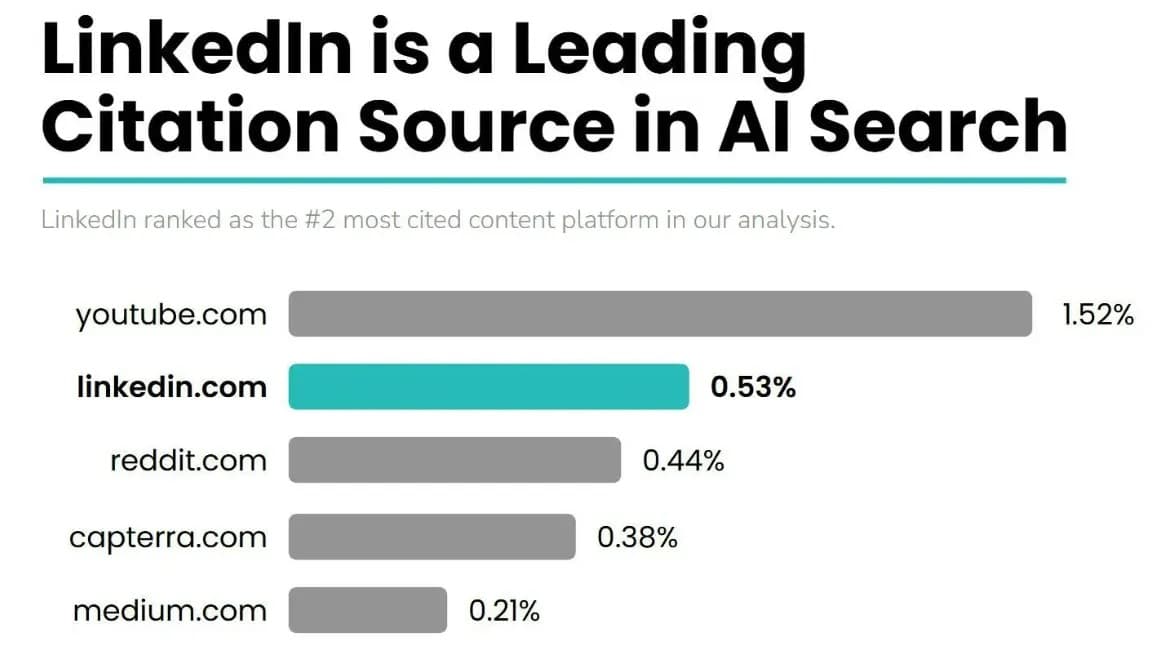
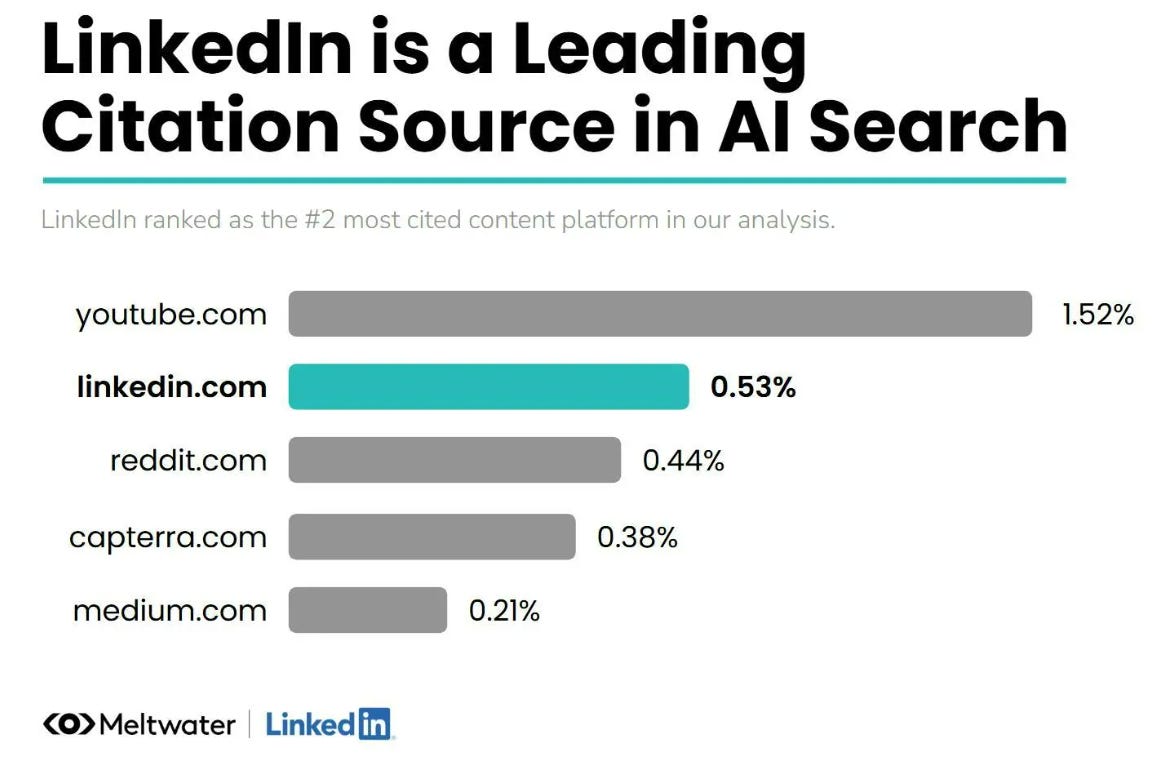
And here comes the key information: according to a recent study conducted by the media monitoring company Meltwater, LinkedIn is the second most cited source by AI models, right after YouTube. Today, I will share some key extracts from this fresh study.
So let’s get started:
“Across the models analyzed, 75% of LinkedIn citations came from content posted by individual members, while 25% came from Company Pages.”
What a surprise, personal profiles win. But not all of them have the same odds.
Research shows that 49% of cited creators have more than 10K followers. Since we know that only a few LinkedIn profiles have that kind of reach, it clearly indicates that the more followers you have, the more relevant AI considers you.
Still, everyone has a chance. Here are the formats that get quoted the most:
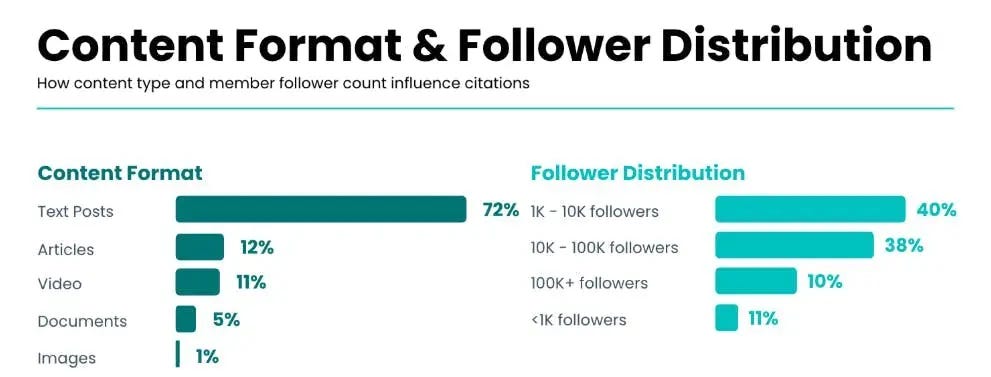
Since we know that very few LinkedIn posts are actually articles, yet they account for 12% of all citations, I would bet my money on them.
Here is what you need to mention in your article to get a shot:
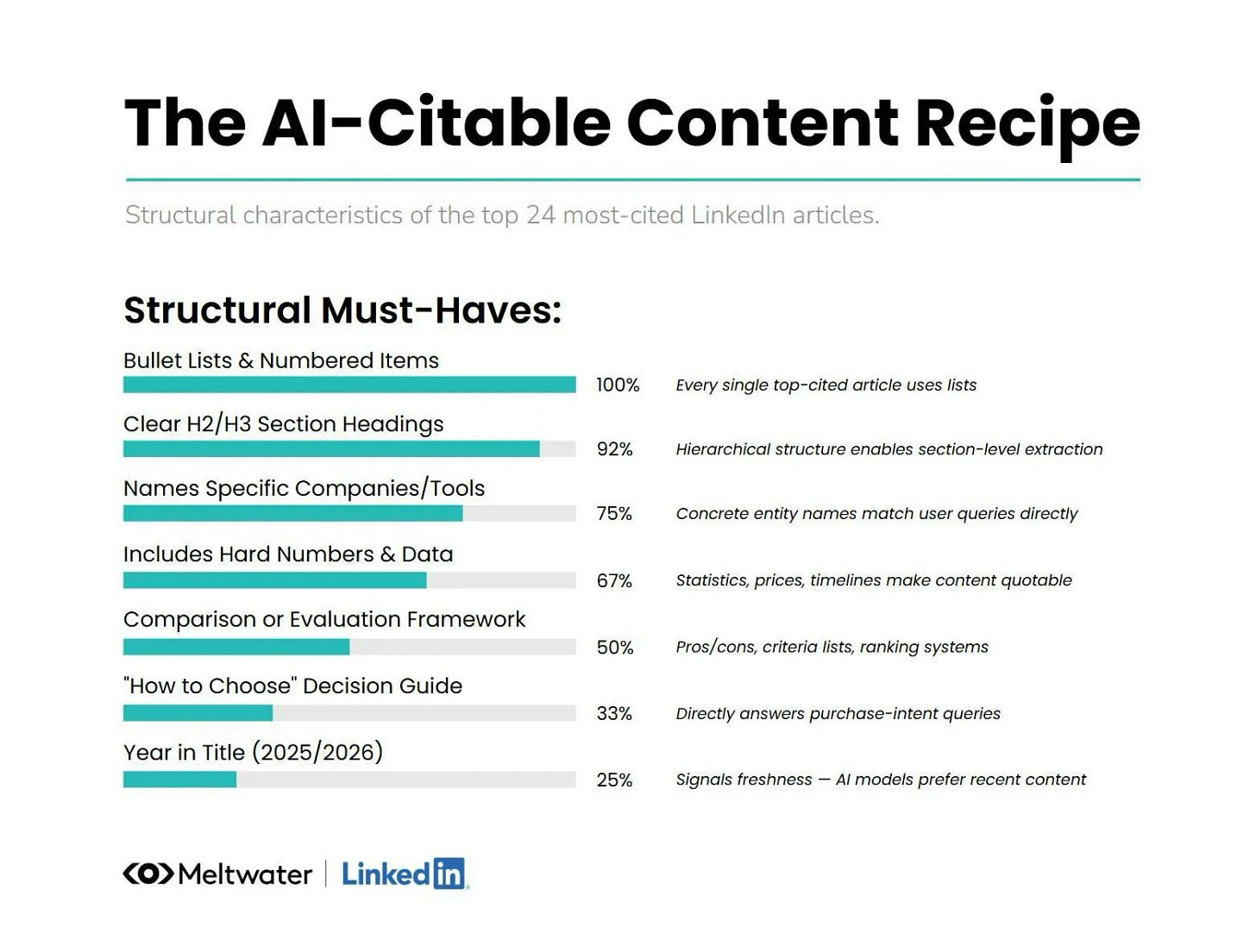
“Treat LinkedIn Articles like an answer you will give to a question. Put the answer near the top. Use sections. Name the tools, companies, categories, and criteria. Add numbers. Make trade-offs explicit.”
That makes sense.
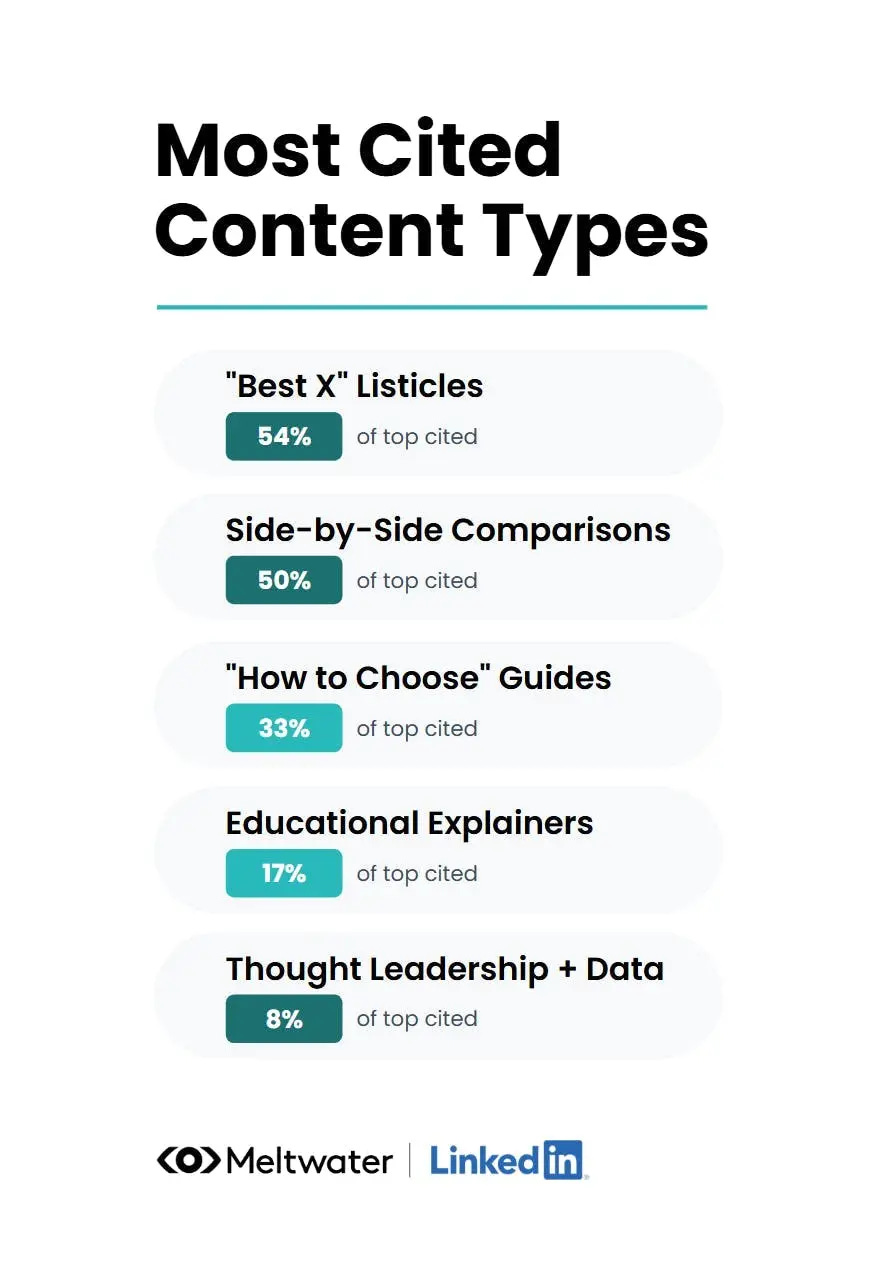
“The highest-performing formats mirror the way people ask AI tools for help.
Best X listicles appeared in 54% of the top-cited content
Side-by-side comparisons in 50%
How to choose guides in 33%
Educational explainers and thought leadership with data also appear, but pure opinion is less likely to be cited on its own.”
Less blah blah emotions, more structured substance.
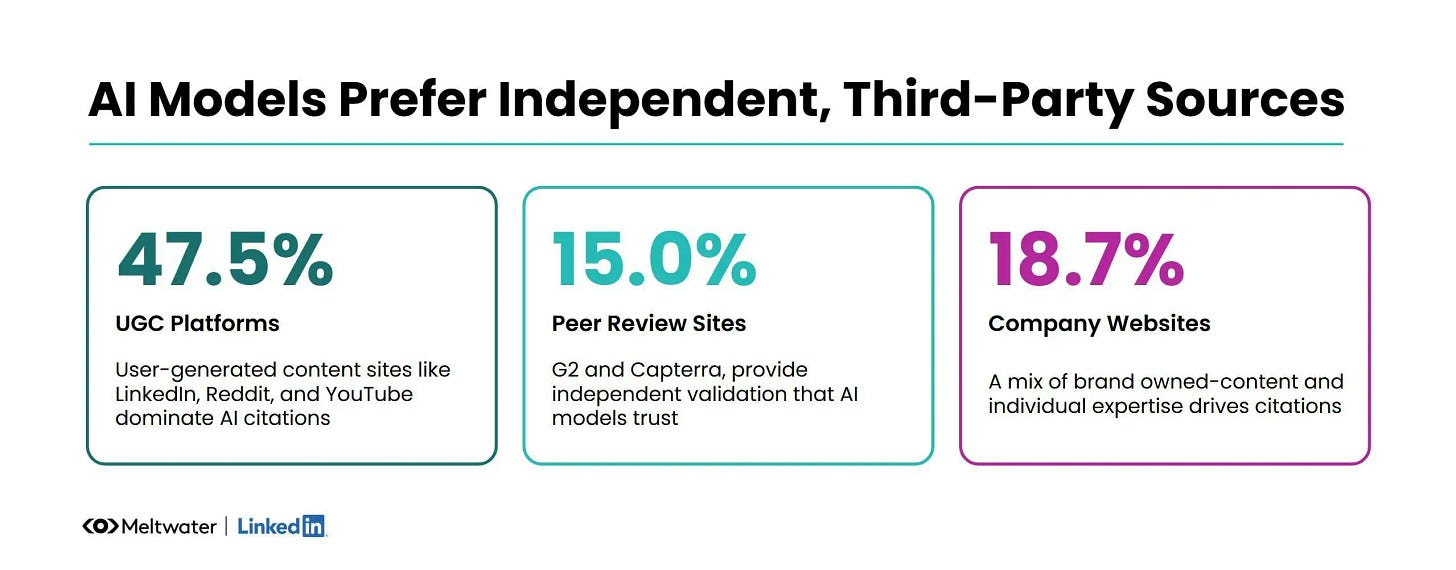
And here is the breathtaking part: half of all AI search results are generated based on social media content:
And I cound’t stress it more:
“Plain text posts and articles made up 83% of cited content in the report.”
This is not a game of pictures, this a game of texts.
Publish now, publish forever:
“The report found that 72% of AI-cited content was original, not reshared. It also found that 48% of cited content was published in the previous three months, offering a strong rationale for consistency and recency.”
SO HERE IS THE PLAYBOOK:
Identify 25–50 high-intent prompts related to your category, including queries like “best,” “compare,” “how to choose,” “what is,” “pricing,” “risks,” and “implementation.”
Optimize your LinkedIn profile to position yourself as an authority in your niche.
Publish weekly short- and long-form text posts that meet the following criteria:
A clearly defined target question (in the title)
A direct answer at the beginning of the text
Concrete proof points
Named entities, evaluation criteria, examples, and data points
May the AI be with you.